Why Seed Saving?
My interest in seed saving first started back in 2010, on a permaculture course at Ragmans Lane Farm. It was the first time I really understood that the seeds we buy are mostly controlled by just a few huge companies, and that only a tiny percentage of our incredible genetic heritage is now commercially available. That idea stuck with me. I became fascinated by the power of locally-adapted seeds and have always been drawn to varieties with stories behind them. In fact I am so often drawn in by the story that every year, in winter, I buy way more seeds than I can feasibly grow. Over and over again.
I’ve been saving seeds casually over the years, but not necessarily always accurately. So, this year, I decided to get serious. Doing the Gaia Foundation’s Seed Sovereignty course was about finally getting the skills to properly play a part in saving and spreading these seeds, helping to keep our heritage and genetic diversity alive.
This blog will act as my portfolio for the course, which is why I’ll be going into a fair bit of detail as I track the learning outcomes. I wanted to share it publicly in case the process is interesting or useful to anyone else thinking of giving seed saving a go or growing the particular varieties I saved from.
Background Research
For my main project, I chose two varieties from the Heritage Seed Library: a pea called ‘Lockies Early’ (Pisum sativum) and a dwarf broad bean, ‘Bonny Lad’ (Vicia faba). Both of the names jumped out as sounding like they have Scottish heritage to me so I was hoping they would suit my climate.

Broad Bean ‘Bonny Lad’
The description from the seed listing on HSL is:
“A dwarf variety reaching around 50cm in height. The pods grow in a nonuniform way, pointed both upwards and down, and contain 4- 5 beans in each, Best picked when the tasty beans are just visible in the pods.”

I started out by trying to do a little bit of background research on both varieties. I found quite a few mentions of Bonny Lad in the 80’s and 90’s. Some of which were in the UK such as The Gardener’s Chronicle and Horticultural Trade Journal (1981) which mentions twice that it is a variety suitable for both Spring & Autumn sowing. It also says it is good for freezing, has a dwarf habit and that a packet of ‘Bonny Lad’ will cost you 52p.

The majority of mentions I have found are from the US. It is described in the beautifully illustrated Gardeners Guide to Fava Beans by Ianto Evans (1992) as a ‘British’ variety. I also found a recipe for Fava Bean wine in there.

In says Seed Savers Yearbook (1991) the Seed Savers Exchange say in 83 days they have a green shell, in 113 days they are dry and that they have an inconsistent height. Not Sure I’ll be hitting those growth rates in Scotland. In 1989 Duane Newcomb in The Complete Vegetable Gardener’s Sourcebook says they take 75 days, pods are 5-6 in. long with 4-5 small light green beans per pod.

I still haven’t found the origins of ‘Bonny Lad’ but I will keep looking. The closest I have come to it’s origins is from an article in Country Life Magazine 1981, “At last, the short, branching stemmed broad bean known as The Sutton, which for two decades at least has been the only one of it’s type, is being challenged by rival races of equally squat, foot-tall growers. Bonny Lad (from Marshall Seeds, Wisbech, Cambridgeshire) is almost its identical twin, save that the beans are white-eyed”. So perhaps my next step is to get in touch with Marshall Seeds to see what records they have. About the the ‘white-eyed beans’ – I’m not totally sure if the pictures sent to me by HSL show a white eyed bean but I’m not really familiar with broad bean differences – maybe someone else is?
Pea ‘Lockies Early
The description from the seed listing on HSL is:
“Our donor has grown this variety since 1982 when he was given some seed by his farming neighbour. The peas had originally been given to the farmer’s mother and father in 1906 as a good luck wedding present by ‘Lockie’. the farm’s shepherd. This continued the Cotswold tradition that if you had a supply of dried peas you would never starve, A hardy pea growing to around 1m in height and producing white flowers and long pods”

The HSL describes this heritage variety as growing to about 1m. As it turned out, it had bigger ideas in my garden. Unfortunately I haven’t found any other information for Lockie’s Early so far.
Planning
My journey started with just ten seeds of each. My research (from Back Garden Seed Saving by Sue Stickland and guides by the Seed Savers Exchange) recommended a population of 10-25 plants for variety maintenance. Knowing I was right on the edge, on March 18th I emailed the HSL to ask for more seeds, but none were available. I guess this helped to underscore the importance of saving these seeds when they are so scarce. It doesn’t give me much leeway though when it comes to rogueing and selection.
The other big planning challenge was isolation. Peas are inbreeders, so they’re easy – the seed savers exhange guide recommends 3-6m between other varieties of peas. For the most part pea flowers pollinate themselves before they are even fully open and they have perfect flowers are meaning each flower contains both male (stamen) and female (pistil) reproductive parts.
Broad beans, however, are outbreeders that love to cross-pollinate. They are pollinated by a mixture of self pollination and insect pollination (Bees) so the isolation distances are based on how far a bee can fly in a day. Sue Stickland says that for commercial growers you need to be growing 1000m apart from other broad beans but for back garden growers with plenty of living barriers much shorter distances are acceptable. The Seed Savers Guide suggested an isolation disatnce of 49-152m – and so I came across my first of the many contradictory things you’ll be told about the ‘rules’ of seed saving. I decided to aim for 150m.
To be thorough, and at the risk of looking slightly unhinged, on February 21st, I posted on my local Facebook page to identify other growers who might be growing broad beans in the vicinity. Not a fail safe method for sure as lots of people aren’t on facebook. Because of how the streets around me are laid out I can actually see into lots of my nearby gardens and with my garden maintenance job I have actually looked after quite a few of the gardens in the streets around my house so I know who in the immediate vicinity grows veg. The only thing that popped up from the post was a neighbour growing runner beans (Phaseolus coccineus) which won’t cross with broad beans posed no threat. .

Characterisation Photographs
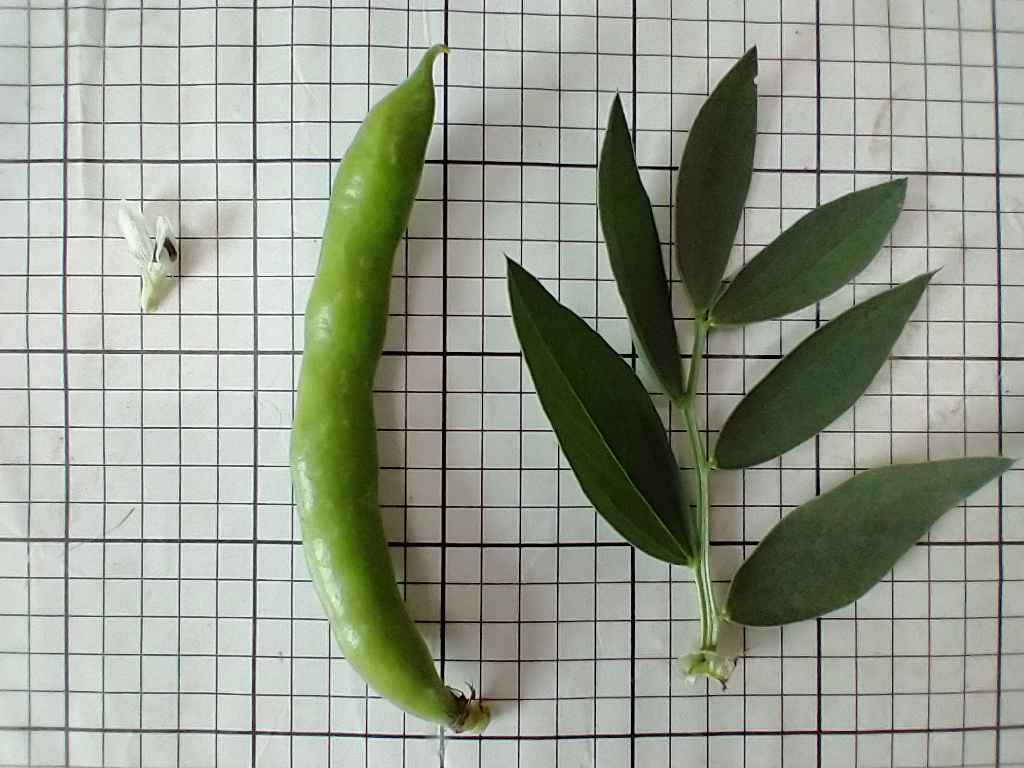
The HSL kindly sent me a set of their official characterisation photographs for both ‘Bonny Lad’ and ‘Lockies Early’. These will be my guide throughout the season, acting as the benchmark for what is ‘true to type’ when it comes to checking the plants and rogueing out any that don’t look right.
Bonny Lad


Lockies Early


My Growing Site
My growing site for both is at home, in my raised beds in my garden. I live in East Ayrshire on the edge of a small town with the fields around me mostly belonging to a dairy farm. My garden is 97m above sea level on a slight south facing slope. I’m growing my crops in the area of my garden with raised beds so drainage is good and they are far enough away from the house that it gets full sun. The specific bed I’m going to plant the crops in are sheltered from the prevailing winds by a mixed hedge on the west – the same hedge shades the bed come evening time.
I built my raised beds about 7 years ago and half filled them with the turf I lifted to build them and then topped with my own compost. Now they get an annual top up from my compost and the free Green Waste compost we can pick up from East Ayrshire Council. The bed that both my crops are growing in had Brassicas in it last year.
February & March 2025: Sowing and Planting Out
Weather (March): Warmest March on record for Scotland.
My season began on February 21st, when I sowed the seeds for both crops. I sowed each of the 10 seeds individually into 9cm square pots, using sieved green waste compost from the council. I kept them in my unheated utility room which has a perspex roof section, giving them plenty of light.


The peas were the first to show life, with the first sign of germination on March 4th. By March 18th 9 out of 10 seeds germinated for both the peas and the broad beans – a 90% success rate, which I was very pleased with. From this point, I started taking them outside on nice days to get watered and begin hardening off, spending some time in the big bad world.


On March 24th, I planted both crops out into their final positions in the raised bed. The roots were looking well-developed and the young plants all looked healthy. I planted both the peas and the broad beans out in double rows, 20cm apart.


April 2025: First Observations
Weather: Dry and sunny.
Activities: The young plants were establishing well in the raised bed. By April 28th, I had put in cane supports for the peas to climb and placed a kid’s pinwheel in the bed as a bird scarer.
Crop Health: Around April 28th, I observed the leaves on the young pea plants were beginning to look a bit yellow. My initial thought was a possible nutrient deficiency so I was keeping a close eye. The broad beans were growing steadily with no issues noted.


May 2025: Flowers and First Pods
Weather: The dry spell continued for most of the month.
Activities: I was away for the first week of May, and when I returned, the growth had been significant. On May 9th, I noted that the peas had really shot up and both crops were now producing their first flowers. The bees were soon buzzing around the broad beans, which was a great sign.


There were a few pea pods on by May 20th and lots of tiny new ones on the way. There was also the start of tiny Broad bean pods too. By May 30th the broad bean pods were growing quickly.


Crop Health: Both crops were looking vigorous and healthy. The yellowing on the peas that I’d been monitoring in April had started to resolve itself. I’m assuming it was so dry that the nutrients weren’t available to the plant. I think potentially a Boron deficiency as I think that’s common with drought and peas. The only issue was some pest pressure: I noticed that the growing tips and leaves of the peas were being nibbled, which I put down to the local sparrows. I added some old CDs to the supports which they proceeded to ignore.

June 2025: Unwanted Guests
Weather: The warm and sunny weather continued, but we had some heavy thunderstorms and downpours at the start of the month.
Activities: The main activity this month was observing and managing pests.
Crop Health: The downpours at the start of the month had bashed the broad beans a little bit, but they were otherwise healthy. The peas were looking good and were covered in developing pods and the broad beans were continuing to set more pods and grow them bigger.


However, this was the month the garden guests made themselves known. On June 8th, I finally got video evidence of the sparrows completely ignoring my bird scarers and tucking into the peas.
Then, on June 11th, I noticed the growing tips of ‘Bonny Lad’ were shrivelled and distorted. On closer inspection, I found a what I think was an infestation of leafhoppers and some aphids, there were some ants hanging around eating the aphids too. I thought I also seen a tiny delphastus beetle which tends to like to eat whiteflies. Leafhoppers seemed unusual according to rest of the internet but I put it down to the ridiculously warm spring we’d had. My solution was to just snip the infested tops off—brutal, but hopefully effective, as it removes the pests and encourages the plant to put its energy into the pods it had already set and stop produce soft fleshy growth that the bugs love.


On Jun 21st I noticed the first of the Peas that were starting to look like they had gotten as big as they were going to get and were starting to shrivel a little. There were still lots of new pods forming and swelling and the Broad beans were getting to a decent size.


July 2025: A Race Against the Rain
Weather: A typical Scottish mix of sun and wet weather.
Activities: This was the start of the harvest. I had a holiday booked, and having had some wet weather and more in the forecast, I did a panic-harvest of the driest-looking pea pods on July 4th because I had seen other Scottish growers having trouble with mildew. I brought them inside to dry in trays in the utility room. When I returned from holiday on July 13th, I harvested a few more pods and was pleased to see the first batch was already brown and drying well. The conditions in the utility room were a helpful 27.9°C with 55% humidity.


Crop Health: By July 2nd, the pea plants were a picture of a full life cycle: new flowers were still forming, green pods were swelling, and the early pods were becoming dry and papery on the vine. By the 21st, parts of the plants were in senescence (dying back) while other parts were still producing fresh pods. On the broad beans, I was now spotting what looked like bean rust on some of the leaves, though the pods were still a good size and plentiful.


August 2025: The Final Push
Weather: A glorious dry spell for most of the month, which was perfect for the final ripening of the pods. This broke dramatically on August 29th with thunderstorms and torrential rain.
Activities: The main activity was monitoring the crops as they dried down and then bringing in the final harvest, with the timing dictated by the weather forecast. On August 28th, with two weeks of rain predicted, I decided to pull everything up. The last of the pea pods were harvested, and the entire ‘Bonny Lad’ broad bean plants were pulled up to finish drying in the garage.
Crop Health:
- Peas: By August 10th, the majority of the pea plants were in senescence, with brown, dry foliage, although a few fresh green pods were still being produced. The final batch of pods harvested on the 16th was noticeably more affected by mould and mildew than the cleaner batch I had brought in during July.
- Broad Beans: The drying process accelerated through the month. On August 10th, the lower pods were starting to go black and dry out. By August 16th, lots more of the pods were black and ripening up. By the final harvest on the 28th, the pods were dry and brittle.


September 2025: The Final Tally
Activities With the plants harvested, September was all about the final, crucial steps of processing the seeds. On September 15th, I sat down to shell the peas. It was a really interesting process, and I decided to keep the three different harvest batches separate to see if there was a difference. The results were:
- The first batch harvested in early July had an average of 7.5 peas per pod.
- The second, larger batch from mid-August had an average of 4.9 peas per pod.
- The final batch from the end of August had an average of 5.4 peas per pod.
To be honest a big amount of the difference is probably that for the first batch I really picked off the best looking pods. In total, I counted out 910 individual peas. The total weight of all my peas was 300g.


I had to discard 3 or 4 pods due to some pest damage, though I wasn’t entirely sure what had caused it. I got out my little jeweller’s loupe to get some very close-up pictures of the beasties and their droppings. I have lots of pictures, so maybe a blog reader can help me identify the culprit!
The broad bean plants are still drying in the garage and will be shelled next.


On September 22nd, it was time to process the ‘Bonny Lad’ broad beans. The plants had been hanging in the garage since August, but I’d recently learned from a visit to Seeds of Scotland that even dry-looking beans can re-absorb moisture from the air, feeling ‘spongey’ in the morning and only becoming brittle later in the day. To make sure they were perfectly dry for storage, I brought the whole plants into my utility room, where my dehumidifier was running the relative humidity down to 40%. I left them there for about 24 hours before I started shelling.
Once I shelled them, I found one or two beans had dark brown spots or blemishes, which I suspect is chocolate spot.

Seed Yield This is the really satisfying bit: seeing what a season’s work, which all started from just 10 seeds of each, actually produced.
- ‘Lockies Early’ Pea Yield: 910 peas (Total Weight: 300 g)
- ‘Bonny Lad’ Broad Bean Yield: 355 beans (Total Weight: 587g)

Storage
Next job was to get them all ready for long term storage. I kept them in open containers with my dehumidifier running for a week or so. Then I transferred them to sealed containers and I put a reusable dehumidifier sachet in each container – the type you use sit on your car dashboard. I’ll keep an eye on the over the winter and then when I gets to the start of the growing season I’ll be sharing some out with whoever is interested in helping to save the varieties.
Germination Test
I did a germination of my saved seeds, just a wee sample of ten of each. All of the broad beans germinated and 9/10 of the peas did – I think that last one might eventually too but it is quite far behind the other. Anyway I’m happy with those numbers!


Reflections
When I grow the crop out next year I’ll get a good sense of of whether the Broad Beans did any unplanned crossing. In terms of what I would do differently: I will make a taller support for the peas. I might also try and get a better bird scarer but to be honest my wee flock of sparrows really helped me with the caterpillars on my Perennial Kales this year. I would consider netting them – I usually find nets a faff for harvesting but if it’s mostly for a seed crop it could be worth a try.
Leave a Reply